Filed Under (Events, General) by ronan on 23-10-2010

As a member of their board I was pleased to attend the Annual conference of the UK Resource Centre for Women in Science, Engineering and Technology, held at the QEII Centre in Westminster, London on October 12th. As with last year there was a large turnout and some very interesting and engaging debate. The event was very effectively hosted by Kate Silverton, with guest speakers Professor Lord Robert Winston and Dr. Aleks Krotoski, bringing their own perspectives to the issues and speaking with informed passion and commitment. This I felt was in contrast with Miles Templeman CEO of the Institute of Directors who’s contribution was rather limp. With little more than a vague commitment and no evidence of a track record within his own organisation his encouragement of the audience to ask questions was brave if not foolhardy. The inevitable happened and he was very adroitly backed into a corner by questions from an audience that refused to be patronised. In the panel debate I was again impressed by Emily Cummins and also the NUS representative who was brave enough to mention the political dimension of not just the under-representation in the workforce of women but also the political dimension of wider educational debate.
Annette Williams, Director of the UKRC said: “There were more than 300 delegates from across the public, private and third sectors, all sharing a commitment to building gender equality in science, engineering and technology. This was an important opportunity to explore the issues and inspire action, and we look forward to continuing to extend the debate and work with others to bring about change.”
UKRC website
“There were more than 300 delegates from across the public, private and third sectors, all sharing a commitment to building gender equality in science, engineering and technology. This was an important opportunity to explore the issues and inspire action, and we look forward to continuing to extend the debate and work with other to bring about change.”
Filed Under (Uncategorized) by ronan on 07-10-2010
Death of an Irishwoman
by Michael Hartnett
Ignorant, in the sense
she ate monotonous food
and thought the world was flat,
and pagan, in the sense
she knew the things that moved
all night were neither dogs or cats
but hobgoblin and darkfaced men
she nevertheless had fierce pride.
But sentenced in the end
to eat thin diminishing porridge
in a stone-cold kitchen
she clenched her brittle hands
around a world
she could not understand.
I loved her from the day she died.
She was a summer dance at the crossroads.
She was a cardgame where a nose was broken.
She was a song that nobody sings.
She was a house ransacked by soldiers.
She was a language seldom spoken.
She was a child’s purse, full of useless things.
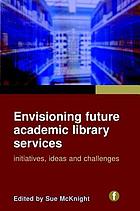 I have been reading an interesting collection edited by Sue McKnight called Envisioning future academic library services; initiatives, ideas and challenges – published by Facet 2010. It was brought to my attention not by the marketing efforts of Facet but rather it was well reviewed in the Times Higher over the summer, which on reflection, the marketing reach of Facet may have had a hand in; I don’t know much about the dark art of book marketing.
There are some interesting contributions Derek Law as always is provocative – one of his sub-sections headed “academic partners, not servants” will strike a cord with many.
Andrew McDonald looks at libraries as place while Liz Wright opens her chapter on future leadership with a quote from William Gibson which I paraprase here: “Only charlatans say they really know the future”.
Paul Coyne, from Emerald and a good friend of Bradford College, writes very well and covers much ground in his look at ‘the discovery and consumption of scholarly content’. He provides a great definition of Library 2.0 (from Maness (2006)) – it has four essential elements:
- it is user-centred
- it provides a multimedia experience
- it is socially rich
- it is communally innovative
Martin Lewis – University of Sheffield – Information Commons – gives a policy level overview of the role libraries might play in managing research data, this is also taken on an international level. His sub-section ‘what libraries can do about data’ gives a clear rationale for what should be done locally, nationally or internationally. He also usefully looks at funding although I suspect that will date quite quickly.
So its a good collection of essays and will be a good text to accompany the discussions of the newly-formed Bradford College library futures group in which about a dozen library staff have already expressed an interest. I’ll deposit the book in the staff library when I’m finished with it – promise.
